

Conservation in Rwanda focuses on protecting nature while supporting people’s livelihoods and national development. It goes beyond saving wildlife to include sustainable use of natural resources that benefit communities, tourism, and the economy. Rwanda is known as a conservation success story because it has restored its national parks, protected wildlife even after facing many challenges in the past. Biodiversity is very important to the country as it supports ecosystems, water sources, agriculture, and climate stability. Conservation is closely linked to tourism with activities like gorilla trekking generating income, creating jobs, and funding community development, making nature protection an important driver of Rwanda’s growth.
History of conservation in Rwanda
In the past, Rwanda had rich wildlife and large forest areas with animals such as elephants, lions, antelopes and mountain gorillas living in natural habitats. Forests like Nyungwe and Gishwati covered wide areas and played an important role in protecting water sources. However, conservation was weak and wildlife protection was not well organized. Many communities depended directly on forests for firewood, farming and settlement.
Over time, major challenges threatened wildlife and forests. Poaching reduced the animal population especially in Akagera National Park where species like lions and rhinos disappeared. Deforestation increased as forests were cleared for agriculture and human settlement, particularly in areas like Gishwati Forest. Poverty and land pressure also pushed people into protected areas in search of survival.
Structured conservation efforts began during the colonial period when protected areas such as Volcanoes National Park were created to protect mountain gorillas. However, these early efforts focused more on wildlife protection than on community needs. The situation worsened during the 1994 Genocide against the Tutsi, when protected areas were damaged, poaching increased, and forests were destroyed as people fled violence and resettled in protected areas.
After 1994, Rwanda rebuilt its conservation systems as part of national recovery. The government strengthened environmental laws, restored national parks, and worked with conservation organizations. For example, Akagera National Park was restored through a partnership with African Parks, leading to the return of lions and rhinos. Gorilla conservation in Volcanoes National Park was also strengthened thus increasing the mountain gorilla population. These efforts transformed conservation into a key part of Rwanda’s tourism and development strategy.
Where conservation happens in Rwanda
Rwanda’s conservation efforts are focused in several key national parks and forest reserves, each protecting unique wildlife, habitats, and ecosystems. These areas have played an important role in safeguarding the country’s biodiversity.
Volcanoes National Park
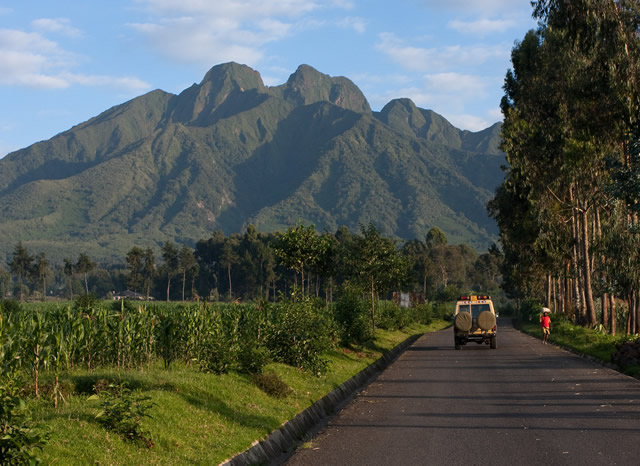
The park is located northwest of Rwanda along the border with Uganda and the Democratic Republic of Congo. Volcanoes National Park is famous for mountain gorillas, however, visitors can also see golden monkeys, forest elephants and over 250 bird species. The park’s landscape is dominated by montane forests, bamboo zones and high altitude volcanic slopes.
Conservation in Volcanoes National Park focuses heavily on protecting gorillas. Rangers monitor gorilla families daily, perform anti-poaching patrols, and provide veterinary care when needed. Tourism is carefully managed with limited gorilla trekking permits to reduce disturbance. Revenue from tourism is shared with nearby communities, ensuring that conservation also benefits local people. Volcanoes National Park has become the cornerstone of Rwanda’s gorilla protection and a major driver of eco-tourism.
Akagera National Park
The protected area is located in eastern Rwanda along the Akagera River near the Tanzanian border. Akagera National Park features savanna and wetland ecosystems. It is home to the Big Five; lions, elephants, buffalo, leopards, and black rhinos with other animals like giraffes, zebras, hippos, and crocodiles.
Akagera has undergone extensive restoration. Conservation efforts include wildlife reintroductions, strict anti-poaching patrols, and habitat rehabilitation. Eco-tourism and community development programs generate income for locals while protecting the park. Today, Akagera is a success story of how degraded landscapes can be restored and wildlife populations recovered.
Nyungwe Forest National Park
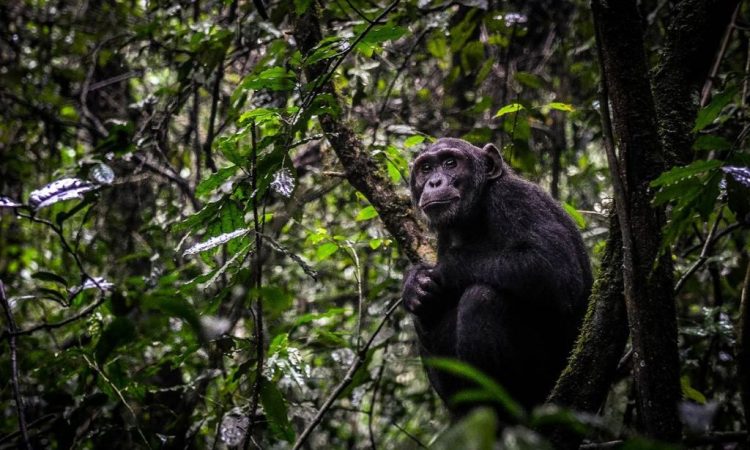
The park is located in southwestern Rwanda near Burundi and the Democratic Republic of Congo. Nyungwe Forest National Park is one of Africa’s oldest rainforests hosting chimpanzees, colobus monkeys, forest elephants and over 300 bird species. The park features dense tropical montane forests, rivers, wetlands and steep valleys.
Conservation efforts in Nyungwe focus on primate protection, anti-poaching patrols, and forest restoration. Guided wildlife tracking tours allow visitors to experience the forest without harming its inhabitants, while tourism revenue supports park management and local communities. Nyungwe is vital for maintaining Rwanda’s rich biodiversity and serves as a hub for research and environmental education.
Gishwati-Mukura National Park
The protected area is located in western Rwanda near Gicumbi and Nyabihu districts. Gishwati-Mukura National Park is known for protecting eastern chimpanzees, golden monkeys, forest duikers and a variety of rare birds. The park features tropical montane forests that have been restored through reforestation projects.
Conservation efforts in Gishwati-Mukura National Park include forest regeneration, wildlife monitoring, anti-poaching patrols, and community-based programs that provide alternative livelihoods. The scientific research in the park guides management decisions while ensuring the long-term health of the forest and its species.
Species and biodiversity
Rwanda’s conservation efforts place strong emphasis on protecting some of Africa’s most endangered and iconic wildlife species. These animals are important not only for the health of natural ecosystems but also for tourism, national identity, and long term development. Through well managed national parks and strict protection measures, Rwanda has become a leading example of successful wildlife conservation.
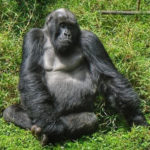
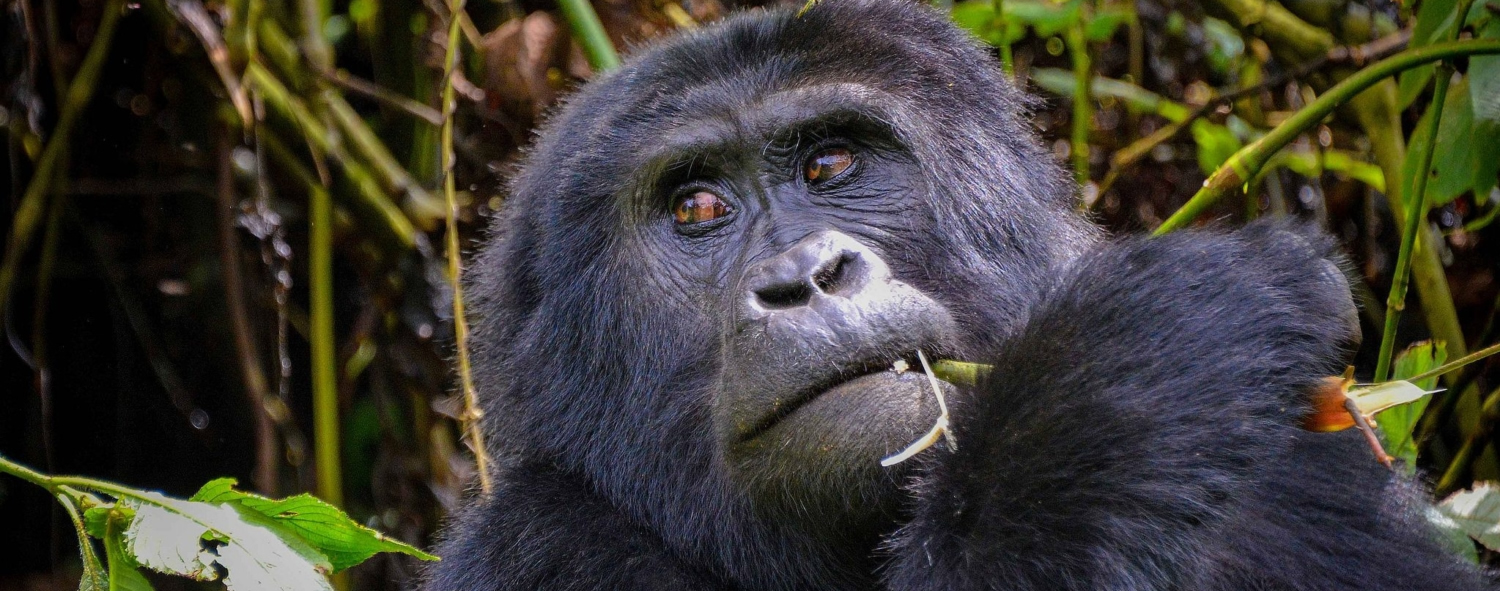
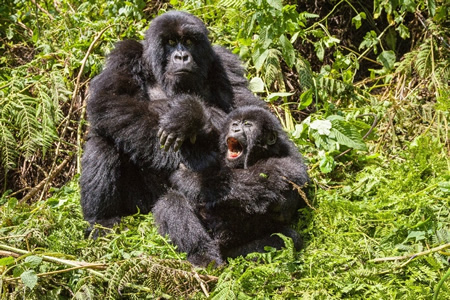
Mountain gorillas are the most well-known and endangered species protected in Rwanda, mainly found in Volcanoes National Park. These great apes are rare and exist in only Uganda, Rwanda and the Democratic Republic of Congo. They play an important role in maintaining forest health by spreading seeds and supporting natural regeneration. Gorilla conservation has also transformed Rwanda’s tourism industry by creating jobs and generating revenue that supports both wildlife protection and local communities. However, mountain gorillas face threats such as habitat pressure from surrounding human populations, the risk of disease transmission from humans, and environmental changes that affect their forest homes.
Chimpanzees are another key species protected through conservation, especially in Nyungwe Forest National Park and Gishwati-Mukura National Park. These species are highly intelligent and social. Chimpanzees have contributed to forest regeneration by dispersing seeds across wide areas. They are also important for research and nature based tourism. In the past, deforestation and forest fragmentation greatly reduced their habitats. Today, conservation efforts focus on protecting forests, monitoring chimp populations, and reducing human-wildlife conflict to ensure their survival.
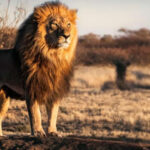
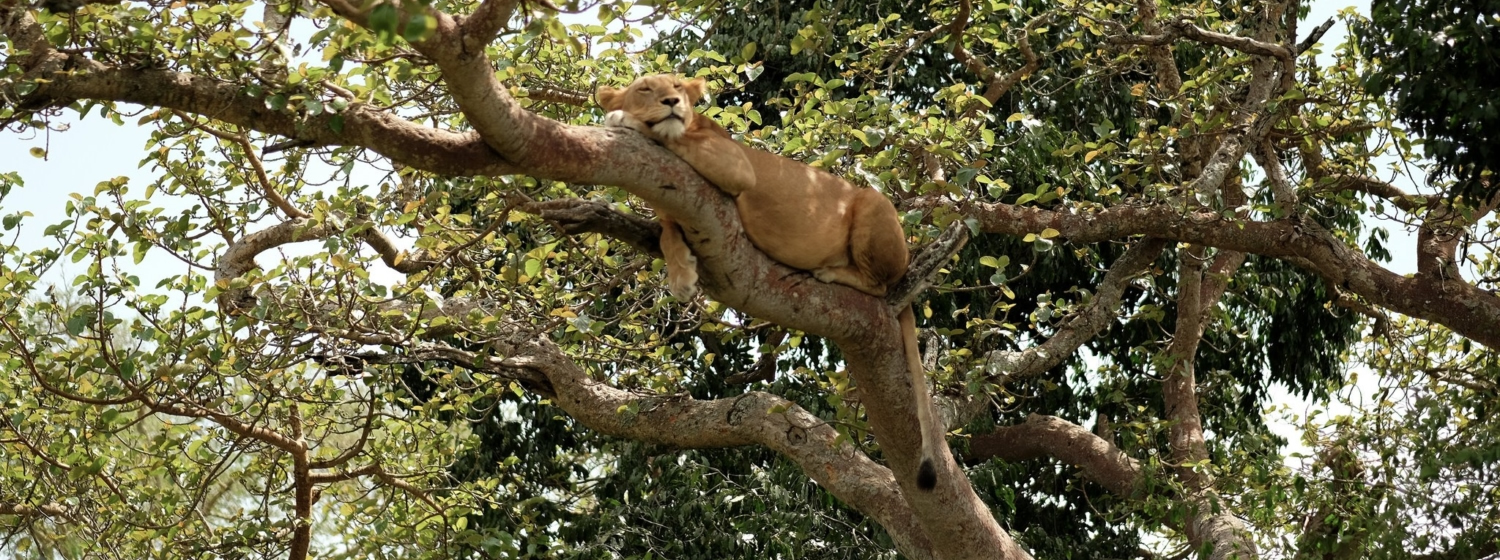
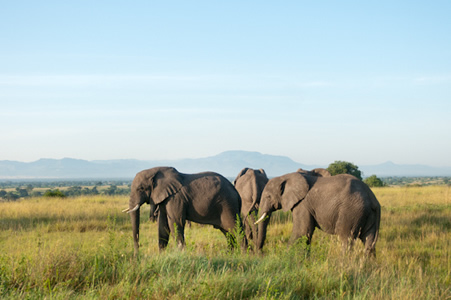
Rwanda also protects members of the Big Five-lions, elephants, buffaloes, leopards, and rhinos and are mainly in Akagera National Park. These species are very important for maintaining balance in savanna ecosystems. Elephants shape the landscape, while predators like lions help control animal populations. Many of these animals faced severe threats from poaching and habitat loss in the past, and some disappeared completely from Rwanda. Through strong conservation partnerships, animals such as lions and rhinos were successfully reintroduced, restoring Akagera as a full Big Five destination.
Birdlife is another important focus of conservation in Rwanda. The country has over 700 bird species. These birds play a key role in controlling insects, pollinating plants and indicating the health of the ecosystems. Forests, wetlands, and savannas provide critical habitats for both resident and migratory birds. However, threats such as wetland destruction, deforestation, pollution, and climate change continue to affect bird populations, making their protection essential.
Conservation strategies in Rwanda
Rwanda conserves nature through a strong combination of law enforcement, modern technology, community involvement, and sustainable tourism. The country treats conservation as a national priority, linking environmental protection with economic growth and community development.
To fight poaching, Rwanda relies on well-trained and well-equipped park rangers who carry out regular patrols in all national parks. Rangers monitor wildlife movements, remove snares, and respond quickly to illegal activities. Strong penalties for wildlife crimes act as a deterrent, and close cooperation between park authorities, police, and local communities helps identify and stop poaching before it causes serious damage.
Technology plays an important role in modern conservation in Rwanda. Rangers use GPS tracking systems to monitor animal movements and patrol routes. Camera traps are placed in forests and savannas to track wildlife populations and detect illegal activity. In some areas, drones are used to survey large landscapes, monitor hard-to-reach areas, and improve security. These tools help conservation teams respond faster and make better decisions based on real-time data.
Tourism strongly supports conservation in Rwanda. Controlled activities such as gorilla trekking, chimpanzee tracking, game drives, and birdwatching generate revenue that is reinvested into park management and wildlife protection. A percentage of tourism income is shared with communities living near parks to support schools, health centers, and clean water projects. This approach helps local people see wildlife as a benefit rather than a threat, reducing conflict and encouraging conservation support.
Rwanda also protects nature through strong laws and clear policies. National environmental laws strictly ban poaching, illegal logging, and encroachment into protected areas. Wildlife protection is enforced by government agencies such as the Rwanda Development Board in partnership with conservation organizations. Clear park boundaries, strict tourism rules, and long-term conservation plans ensure that natural resources are protected for future generations.
Habitat restoration is another key part of conservation in Rwanda. Degraded forests and wetlands are restored through tree planting, removal of invasive species, and reforestation programs. Areas such as Gishwati-Mukura have benefited from large-scale forest restoration, allowing wildlife to return. Wetland protection projects help restore water systems and support birdlife and aquatic species.
Community involvement in Conservation efforts
Community involvement is a central part of conservation efforts in Rwanda. The country understands that protecting nature is only successful when local people benefit and take part in conservation activities. For this reason, Rwanda has created systems that connect wildlife protection with community development and improved livelihoods.
Local communities are involved in conservation in many ways. People living near national parks work as park rangers, guides, porters, trackers, and staff in lodges and tourism facilities. Community members also take part in conservation education programs that teach the value of wildlife and forests. In some areas, local cooperatives are supported to produce handicrafts, run cultural tourism activities, and provide services to visitors.
Conservation brings direct benefits to people. Tourism creates jobs and business opportunities, while improved infrastructure such as roads, schools, health centers, and clean water projects are developed using conservation-related income. By linking conservation to daily life improvements, communities are encouraged to protect wildlife rather than harm it.
Rwanda runs a strong revenue-sharing program where a percentage of tourism income from national parks is returned to communities living around protected areas. This money supports community projects such as classrooms, water tanks, health facilities, and small businesses. Revenue sharing helps reduce poverty and builds positive relationships between parks and neighboring communities.
Tourism plays a major role in supporting livelihoods. Activities like gorilla trekking, chimpanzee tracking, game drives, and birdwatching attract visitors and create demand for local products and services. Many families earn income from guiding, accommodation, transport, food supply, and craft sales. Tourism income also supports training and skills development, especially for young people.
Conflicts between people and wildlife are carefully managed. Rwanda uses electric fencing, buffer zones, and patrol teams to prevent animals from entering farms and settlements. Rapid response teams are deployed when wildlife moves into community areas. In addition, compensation and support programs help farmers recover losses caused by wildlife. Education programs also teach communities how to live safely alongside wildlife.
Roles of government and institutions in conservation efforts
The government of Rwanda plays a leading and active role in conservation, providing strong leadership, clear policies, and firm enforcement to protect the country’s natural resources. Conservation is treated as a national priority and is closely linked to tourism, economic development, and community welfare.
The main government body responsible for conservation is the Rwanda Development Board (RDB). RDB manages all national parks, wildlife protection, tourism development, and conservation programs in the country. It works closely with other government institutions, local authorities, and international conservation organizations to plan and implement conservation activities. Specialized units within RDB oversee park management, ranger operations, research, and community outreach.
Rwanda has strong national policies and laws that protect wildlife and natural habitats. These include environmental protection laws that ban poaching, illegal logging, wildlife trafficking, and settlement in protected areas. Clear park boundaries and strict tourism regulations help control human activities and reduce environmental damage. Conservation policies also promote sustainable land use, climate resilience, and biodiversity protection as part of national development plans.
Law enforcement in conservation areas is strong and well organized. Park rangers are professionally trained and equipped to patrol protected areas, remove illegal traps, and respond to wildlife crime. Penalties for poaching and environmental offenses are strict, acting as a strong deterrent. Cooperation between rangers, police, the judiciary, and local communities ensures that conservation laws are effectively enforced.
Rwanda funds conservation through several sources. Tourism revenue is a major contributor, especially from high-value activities such as gorilla trekking and chimpanzee tracking. A portion of this income is reinvested into park management, ranger salaries, habitat restoration, and community projects. The government also allocates national budget funds to conservation and receives support from international partners, donors, and conservation organizations. Public–private partnerships further strengthen funding and long-term sustainability.
NGOs, Partners and Projects involved in Conservation efforts
Rwanda’s conservation success is strongly supported by partnerships between the government, international NGOs, local organizations, and the private sector. These collaborations bring technical skills, funding, research, and long-term support that strengthen wildlife protection and park management across the country.
One of the most well-known conservation partners in Rwanda is the Dian Fossey Gorilla Fund. This organization works mainly in and around Volcanoes National Park. Its projects focus on protecting mountain gorillas through daily monitoring, anti-poaching patrols, and scientific research. The fund also supports community education, health programs, and sustainable livelihoods for people living near the park. Its long-term research has greatly improved understanding of gorilla behavior and health, helping increase gorilla numbers over the years.
African Parks is another key partner, working in close collaboration with the Rwanda Development Board to manage Akagera National Park. African Parks supports law enforcement, ranger training, infrastructure development, and wildlife monitoring. One of its biggest achievements has been the successful restoration of Akagera, including the reintroduction of lions and rhinos, which returned the Big Five to Rwanda. Poaching levels have dropped significantly, and wildlife populations have recovered, making Akagera a strong conservation and tourism success.
The World Wide Fund for Nature (WWF) supports conservation efforts across Rwanda, especially in forests, wetlands, and community-based conservation areas. WWF works on habitat restoration, sustainable land use, climate adaptation, and biodiversity protection. The organization also supports local communities through conservation education and sustainable livelihood projects, helping reduce pressure on natural resources. WWF has played an important role in promoting environmental awareness and policy support in Rwanda.
Beyond these major organizations, Rwanda works with many other partners, including research institutions, local NGOs, and international donors. Joint projects focus on forest restoration in areas like Gishwati-Mukura, wetland protection, wildlife monitoring, and reducing human-wildlife conflict. These partnerships ensure that conservation efforts are well-funded, science-based, and socially inclusive.
Challenges and threats faced by conservation in Rwanda
Despite Rwanda’s strong conservation success, several challenges and threats continue to affect wildlife and natural ecosystems. These pressures require constant attention, innovation, and cooperation between government, communities, and conservation partners.
Poaching remains a concern, even though it has greatly reduced compared to the past. Some animals are still targeted for bushmeat, illegal wildlife trade, or as a result of poverty in nearby communities. Snares set for small animals can accidentally injure or kill endangered species such as gorillas and antelopes. Continuous patrols, community awareness, and strict law enforcement are needed to keep poaching under control.
Habitat loss is another major threat. Rwanda is one of the most densely populated countries in Africa, which creates pressure on land for farming, housing, and infrastructure. In the past, forests and wetlands were cleared for agriculture, reducing wildlife habitats. Although protection has improved, surrounding human activities still place pressure on park boundaries and wildlife corridors.
Climate change is an increasing challenge for conservation. Changes in rainfall patterns, rising temperatures, and extreme weather events affect forests, wetlands, and water sources. These changes can alter animal behavior, reduce food availability, and increase the spread of diseases. Climate impacts also affect farming communities, which can increase reliance on natural resources and put more pressure on protected areas.
Human-wildlife conflict continues to affect communities living near national parks. Animals such as elephants, buffaloes, and primates sometimes leave protected areas and damage crops or property. This can create frustration and negative attitudes toward conservation. Although fencing, buffer zones, and rapid response teams help reduce conflicts, complete prevention remains difficult.
Some challenges still remain. Sustainable funding for conservation must be maintained as tourism fluctuates. Balancing development needs with environmental protection is ongoing. Population growth, climate pressure, and regional wildlife crime networks require constant vigilance and adaptation.
Achievements of conservation in Rwanda
Rwanda has achieved remarkable conservation successes that have made it a model for wildlife protection in Africa. Through strong leadership, partnerships, and community involvement, the country has restored wildlife populations, strengthened park management, and grown eco-tourism in a sustainable way.
One of Rwanda’s greatest conservation achievements is the recovery of the mountain gorilla population. Once critically endangered, mountain gorillas have steadily increased in number due to strict protection, daily monitoring by rangers, veterinary care, and controlled tourism. Volcanoes National Park is now one of the safest habitats for gorillas, and revenue from gorilla trekking directly supports conservation and nearby communities.
Another major success story is the restoration of Akagera National Park. With support from African Parks, Akagera transformed from a heavily poached and degraded area into a thriving wildlife reserve. The successful reintroduction of lions in 2015 and rhinos in 2017 and later years returned the Big Five to Rwanda. Today, Akagera supports healthy populations of elephants, buffaloes, giraffes, zebras, and predators, and poaching has dropped sharply.
Rwanda has also made significant progress in strengthening park protection. National parks are now clearly protected by law, with well-trained ranger teams, modern surveillance systems, and regular patrols. Electric fencing, improved infrastructure, and strong law enforcement have reduced illegal activities and human-wildlife conflict. Forest restoration projects have helped reconnect habitats and protect biodiversity.
The growth of eco-tourism is another major achievement. Rwanda has positioned itself as a high-value, low-impact tourism destination. Activities such as gorilla trekking, chimpanzee tracking, game drives, birdwatching, and canopy walks attract visitors while protecting ecosystems. Tourism revenue supports park management, conservation projects, and community development through revenue-sharing programs.
Role of Tourism in conservation
Tourism plays a very important role in supporting conservation in Rwanda. The country uses tourism not just as a source of income, but as a tool to protect wildlife, support communities, and keep national parks sustainable.
Tourism helps fund conservation by generating revenue that is reinvested into park management. Money from park entry fees, gorilla and chimpanzee trekking permits, and guided activities supports ranger salaries, anti-poaching patrols, wildlife monitoring, and habitat protection. This steady income allows parks to operate effectively and reduce reliance on external donors.
Permits play a key role in protecting wildlife. In Rwanda, trekking permits for gorillas and chimpanzees are carefully limited to control visitor numbers. This reduces stress on animals and minimizes environmental damage. Permit fees are also high-value, which helps raise significant funds while keeping tourism low-impact. The controlled permit system ensures that tourism supports conservation rather than harming it.
Responsible tourism further strengthens conservation efforts. Visitors are required to follow strict rules, such as keeping a safe distance from wildlife, limiting group sizes, and respecting park guidelines. These rules help protect animals from disease, disturbance, and habitat damage. Tour operators and guides are trained to educate tourists about conservation and responsible behavior.
Eco-tourism has had a strong positive impact in Rwanda. It has created jobs in guiding, hospitality, transport, and craft production, especially for communities living near parks. Through revenue-sharing programs, tourism income supports schools, health centers, water projects, and local businesses. As communities benefit directly, they become more willing to protect wildlife and natural areas.
Future outlook on Conservation in Rwanda
Rwanda’s future conservation outlook is focused on long-term protection of nature while supporting national development. The country aims to strengthen its position as a global leader in sustainable conservation by protecting biodiversity, improving community livelihoods, and adapting to new environmental challenges.
One of Rwanda’s main future goals is to further protect and restore ecosystems. This includes expanding forest cover, restoring degraded wetlands, and strengthening wildlife corridors between protected areas. Rwanda also plans to increase animal populations in national parks while ensuring habitats remain healthy and balanced.
Innovation will continue to play a key role in conservation. Rwanda plans to expand the use of technology, such as advanced wildlife tracking systems, drones for surveillance, smart fencing, and digital data collection for ranger patrols. Climate-smart conservation approaches will also be introduced to help parks and communities adapt to climate change and reduce environmental risks.
Visitors will remain an important part of Rwanda’s conservation future. Tourists can support conservation by choosing responsible tour operators, following park rules, reducing waste, and supporting community-based tourism projects. Visiting national parks, paying permit fees, and purchasing local products all contribute directly to conservation funding and local development.
The long-term vision is sustainability, where people and nature thrive together. Rwanda aims to balance conservation, tourism, and economic growth so that natural resources are protected while communities benefit. By investing in education, innovation, and partnerships, Rwanda’s conservation future is built on resilience, responsibility, and shared benefits for generations to come.